A three-decade-long conspiracy of corruption and perversity in The New Zealand Police.
NO NEED TO MAKE STUFF UP, THE TRUTH IS SUFFICIENT.
“All members of the New Zealand Police have key roles to play in building and maintaining safer communities together. Those of us who have the privilege of holding the office of constable – that is, being sworn police officers – carry special powers to help protect life and property, preserve the peace, uphold the law and prevent and detect criminal offenses. These powers come with important responsibilities. Chief among them, New Zealanders have a right to expect the highest standards of ethics, integrity and conduct from their police officers.” Rob Robinson, Police Commissioner. NZ Police standards of conduct. The following standards of conduct are expected of all police officers:
Honesty and integrity
Fairness and impartiality
Respect for people
Respect for confidentiality
Obedience to the law and lawful orders
Reasonable exercise of discretion
Efficient performance of duties
Not damaging the reputation or relationships of the Police
.
The statement “Once a cop, always a liar” refers to a perspective on police culture and the legal allowances for deception by law enforcement. While not universal for every individual officer, it reflects a documented reality regarding police tactics and trust.
Legal and Practical Context of Police Lying
Legal Permissibility:In many jurisdictions, including the U.S., it is legally permissible for police officers to lie to suspects during interrogations to gain a confession or advance an investigation.
Investigative Tactics:Deception is considered a, or sometimes “the”, tool to secure confessions, which has led to accusations that lying is woven into the fabric of police culture.
Limitations on Deception:Police are generally not allowed to use deception to the extent that an innocent person would admit to a crime they did not commit.
Risks and Accountability:If an officer lies in a way that violates rules of procedure or constitutional rights, their credibility can be challenged in court.
Public Perception and Trust
Impact on Credibility:The perception that police lie often makes it difficult for the public to trust law enforcement.
“Blue Wall of Silence”:There is a belief that police protect each other, which can extend to covering up lies or misconduct.
Documentation:Incidents of officers lying in witness boxes or in police reports are documented in various cases.
Behavioral Perspective
Predictor of Behavior:Research suggests that individuals who have lied before are likely to lie again in similar situations, supporting the notion that if a behavior is established (whether in law enforcement or elsewhere), it is likely to be repeated.
Counter-Perspectives
Not Universal:Many argue that not all police officers lie all the time, and that the profession requires integrity.
Recording Evidence:The use of body cameras has increased accountability, making it harder for officers to lie about their actions.
Individual Variability:While some may become accustomed to using deception, others do not, or they may leave the profession due to ethical conflicts.
The NZ Police are a sizeable bureaucracy with a greatly inflated sense of importance. Their stock in trade is secrets and lies, so by definition (although not necessarily in fact) those secrets and lies are important. Hunting down and punishing people who reveal those secrets and lies is a vital part of protecting the brand.
Michael Daly
August 8, 2025 • 5:00am
Police shoot man in Rotorua
Coroner Michael Robb has found that the death of Shargin Stephens, 35, who was shot twice by a police officer in Rotorua in 2016, was “preventable”.
The probationary officer who shot Stephens had placed himself in the ‘danger zone’, and his actions had led to Stephens reacting, the coroner said.
The coroner said the narrative of events provided by the officer was “consistently inaccurate”.
Robb also expressed concern that accounts given by officers at the inquest into the death of Shargin Atarea Stephens “did not accurately reflect what occurred”. The narrative of events given by the officer who shot Stephens – referred to as L05 – was “consistently inaccurate”.
Comments
1 If it’s true it would be the story of the year. weizguy.
2. paula wrote: It’s a very informative site. There’s nobody more motivated than a Dutchman who has a grievance concerning money and reputation!
3. Bentcops is quite a revealing insight into NZ’s police. I’m personally familiar with some of their devious and heavy-handed machinations. Greg
4. I feel secure in the knowledge that there are people among us capable of clear communication. I am impressed by your work Jack. I have understood the complexity of what you have said. I myself have limited academic ability. Therefore I am grateful to be privy to this particular educational gem. Regards Steven
5. This is a very impressive piece of work. I’m concerned that the damning criticisms of the police on this site have gone unanswered and I suspect I know the reason – I think they must be valid. Anon
6. This website shows you what a (NZ) Dutchman with various grievances can do if he is pissed off! You can be assured of several hours of informative and entertaining reading. (Jack, the person concerned, has that blunt and obscene turn of phrase characteristic of his demographic) It will take you into the compromised world of the NZ Police.
7. “I think this site has a genuine purpose and seems to be monitored by a humorous (in spite of the experiences he’s had to endure), careful (in so far as collecting evidence to present a truthful account), and remarkably emotionally/mentally resourceful man (again in light of what he has had to endure – a lot of people would lose the plot but Jack has put a good deal of his no doubt frustrated energy into attempting to restore some sort of logic to the chaos of the events instead of resorting to ignorant violence).”
8. As a person that joined the Police in my 40’s the biggest shock I encountered was the continual lying, bullying and deceit that is a deliberate systemic part of the NZ Police culture right from little lies by Constables to the bigger lies by Commissioned Officers at PNHQ. They seem incapable of understanding how much extra public respect and understanding they would get by simply telling the truth about all kinds of matters. New Zealanders seem to have some naive belief that there is something special about our police in that the corruption that is evident in places like the Australian police does not happen here. After all the evidence that has been produced over the years, why would anyone still believe that we are any different? omand
9 The police are like any children. We need them, love them, but their behaviour is sometimes execrable. When they are unquestionably wrong, destroy families and individuals, it is a far healthier society if we lead them to the truth and force them to do what is unthinkable in their culture currently, admit they were wrong, apologise, and compensate. hobbes123
10 good grief, Quite a read! I completely understand the mindfluckery and injustice you feel, to say the least.
11 ” It is clear this Britton character is unhinged and a menace not only to your family Jack, but I would assume anyone else who might happen to upset him. It reeks of delinquency in their duties (at best) that the police haven’t at the very least had cause to get his guy looked at by a psychiatrist. I can only guess they’re mates of his who feel sorry for him (or somebody is directing them to try and assist him in his pursuit of you). Either way, it is clear the police are not being neutral in their dealings but are showing a bias towards the fruitcake.”
12 I learnt much from sitting on that inquiry. Once it was clear that Mrs Shipley was not implicated it became my first experience of Parliamentary bi-partisanship, as the committee grew increasingly appalled at the untrustworthiness of Police witnesses. No MP on that committee was unaffected. Most shattering was the simple stupidity at senior levels, in sticking to incredible denials in the face of overwhelming evidence, including video footage. The committee had no desire to destroy public confidence in Police integrity. We noted our unhappiness with their evidence and focused the report on protocols for preserving constitutional propriety. It appears from reports of the Wang affair that Police agreement on those might have been as unreliable as their evidence to the committee.” http://www.stephenfranks.co.nz/?p=109 .
nicky59 My chosen field continues to disgust me. (Lawyer) Judges/JPs are corrupt (some of them – especially the JPs – ALWAYS give police the warrants they ask for), police officers routinely lie in court (to the point where most of them -with a pitiful few exceptions – can’t even tell the difference between the truth and a lie after a few years), defense lawyers routinely reveal privileged information to the police/prosecutors, or deliberately do not push a strong line of defense, to help convict their own clients (there are countless innocent men in prison BECAUSE of their own corrupt defense lawyers), most prosecutors have entirely lost sight of their obligation to withdraw charges (or ask that they be dismissed in extreme cases) when they form a reasonable belief that the EVIDENCE does not support the charge (they seem to think trials are some form of “game” that they need to “win”). posh_paws (3 ) 9:58 pm, 16 Mar 09
The NZ Police force is inherently well-resourced, funded from the public purse, and more than capable of fooling the average New Zealander, a fact that has been repeatedly proven over the years with an extraordinary volume of questionable police practices, investigations, cover-ups, prosecutions and the many innocent victims that have eventually been released from prison, but not before their supporters and advocates had experienced the Machiavellian machinations of the New Zealand police force and their well-fed Crown attack dogs.
CAN WE TRUST THE NZ POLICE NOT TO COVER UP THEIR OWN CRIMES?
Yesterday’s bombshell report from the Independent Police Conduct Authority has exposed what Public Service Minister Judith Collins starkly described as corruption within New Zealand’s police force. On the question of whether the IPCA findings amounted to corruption, Collins was blunt: “If it walks like a duck and quacks like a duck”. Her assessment of the scandal was equally damning: “a total lack of leadership and integrity at the highest level.”
The whole story is an astonishing account of a police force that covers up its own extremely bad behaviour. Public trust in the police should rightly plummet. And questions about the role of all political authorities across the spectrum now need to be asked. From ministerial offices to the current top cops, there needs to be serious scrutiny about the rottenness in New Zealand’s policing.
HISTORY REPEATING: A CULTURE OF MISCONDUCT AND ERODING TRUST
Observers of New Zealand policing will recognise disturbing echoes of past controversies in the McSkimming affair. The parallels are not coincidental. They represent a persistent institutional culture that has resisted decades of attempted reform.
A decade ago, I wrote an article for the Herald on Sunday titled “NZ police are failing the public”. In it, I catalogued a litany of failures, embarrassments and injustices that had accumulated on the police’s record. I pointed to case after case where police conduct had fallen short, and trust in the institution was eroding. From high-profile wrongful convictions such as those of Teina Pora and Arthur Allan Thomas to botched investigations and mishandled sexual assault cases, the pattern was clear: police culture and structures were not adequately safeguarding integrity or public confidence.
Arthur Allan Thomas spent nine years in prison after Detective Inspector Bruce Hutton planted a cartridge case to incriminate him in the Crewe murder. A Royal Commission in 1980 concluded that police had committed an “unspeakable outrage.” Yet decades later, in 2013, then-deputy Police Commissioner Mike Bush described Hutton as having “integrity beyond reproach” at his funeral. Such incidents sent a signal that police leaders were more inclined towards cover-ups than self-policing.
Notably, my 2015 article highlighted how the police hierarchy tends to protect itself and the powerful, often at the expense of justice. One stark example was the decision not to prosecute a well-connected Cabinet Minister, John Banks, despite strong evidence of electoral fraud – a decision that “smacked of the Establishment protecting itself.” I observed that the police’s mentality seemed “more inclined to cover-ups than rigorous self-policing.”
The McSkimming saga tragically confirms that this mentality has persisted uninterrupted. The instinct at the top has been to cover up, deflect, and close ranks around a senior officer rather than rigorously investigate the allegations. It is a modern embodiment of “the Establishment protecting itself”, with a young female staffer and the public interest on the losing side.
The treatment of women and sexual misconduct complaints has been a running sore for New Zealand Police. The 2007 Commission of Inquiry led by Dame Margaret Bazley exposed pernicious problems in police dealing with women, sparked by the heroic efforts of Louise Nicholas to hold officers accountable for sexual assault. The inquiry found evidence of disgraceful conduct and a culture characterised by strong male bonding, tolerance of sexual misconduct, and a failure to hold officers accountable.
Dame Margaret was disturbed to learn there was no enforceable code of conduct for sworn police officers. The Commission concluded that certain elements of police culture – an insular culture that distrusted outsiders and fostered protection of fellow officers over accountability to the public – had reduced police’s ability to investigate complaints effectively and impartially.
The government accepted all 47 recommendations from the Bazley report and committed to ten years of monitoring. Yet here we are in 2025, facing remarkably similar failures. The IPCA’s current report could have been written in 2007: senior officers displaying an unquestioning acceptance of a colleague’s narrative, failures to investigate serious allegations, prioritisation of protecting an officer’s career over investigating potential misconduct, and attempts to manipulate oversight processes.
THE MCSKIMMING SCANDAL: ANATOMY OF A COVERUP
The facts of this case are devastating. In 2016, Jevon McSkimming, then 40 years old and a Superintendent, began a sexual relationship with a woman in her early twenties whom he met at a sporting club. He later helped her secure a job within the police. After the relationship ended, the woman began making allegations about McSkimming’s conduct.
As early as 2018, anonymous warnings appeared on social media, tagged to both Police and the IPCA, warning that McSkimming had “preyed on a young female” and made threats. These early red flags were ignored, as neither organisation had adequate systems to treat social media posts as formal complaints.
But the failure intensified as McSkimming climbed the police hierarchy. In April 2023, when Police announced McSkimming’s promotion to statutory Deputy Commissioner (effectively the second-highest ranking officer in the country) further anonymous accusations surfaced on LinkedIn, explicitly accusing him of sexual assault on a police employee, misusing taxpayer-funded resources for his affair, and threatening to blackmail his victim with intimate images. These posts were ignored by police leadership.
By late 2023 and into early 2024, the complainant sent over 300 emails to McSkimming’s police address, copying senior officials including then-Commissioner Andrew Coster, Deputy Commissioner Tania Kura, Prime Minister Christopher Luxon, and Police Minister Mark Mitchell. The emails detailed allegations of physical, psychological, and sexual abuse.
Here is where the scandal becomes most egregious. In February 2024, an internal report by the Police’s Fixated Threat Assessment Centre noted that the woman’s messages raised clear concerns of criminal conduct and Code of Conduct violations by McSkimming. The report sensibly recommended referring the matter to the Police National Integrity Unit and the IPCA for investigation of McSkimming.
Instead of heeding that advice, police leadership chose to make the whistle-blower into the problem. No investigation of McSkimming was launched. Instead, police initiated an investigation into the woman herself for allegedly harassing McSkimming. In May 2024, police charged the complainant with causing harm by digital communication, effectively putting the alleged victim in the dock while positioning McSkimming as the victim. This move sent a clear signal: the priority was to protect a senior police executive’s reputation at all costs.
The woman’s lawyer, Steven Lack, describes what happened with devastating clarity: “At every stage, the Police had the opportunity to engage with her, to properly assess what she was saying, and to investigate her allegations. They could have viewed her as a traumatised victim. They chose not to. They accepted Mr McSkimming’s denials without meaningful inquiry and placed the full weight of the criminal justice system on my client for more than a year until the charge against her was withdrawn.”
ANDREW COSTER: THE COMMISSIONER WHO LOOKED AWAY
The IPCA report makes abundantly clear that this institutional failure reached the very top of the police force. Then-Police Commissioner Andrew Coster was informed by McSkimming of the affair and was receiving harassing emails. Yet Coster’s response was to protect his deputy rather than investigate the allegations.
In 2023, while serving on the interview panel for McSkimming’s appointment as statutory Deputy Commissioner, Coster failed to disclose to the Public Service Commission his knowledge of the relationship and the allegations. This failure, the IPCA found, “clearly fell below what a reasonable person would have expected.”
When the matter was finally referred to the IPCA in October 2024, Coster attempted to influence the investigation’s nature, extent and timeframe. As the IPCA report states, these attempts “were perceived by some others within Police as designed to bring the investigation to a rapid and premature conclusion so as not to jeopardise Mr McSkimming’s prospects of being appointed as the next Commissioner of Police.”
One participant at a meeting Coster convened described the pressure: “it was quite clear that he was very invested in Jevon becoming the next Commissioner.” Another officer with moral courage, Officer D, told the IPCA: “this looks like a cover-up.”
Audrey Young of the Herald offers an insightful observation today: “Coster doesn’t strike you as a bad person. Integrity is extremely important to him. Yet a good man can do bad things, even if he doesn’t comprehend it at the time.” This assessment captures something crucial about institutional failure: it is not always about individual malevolence but about a culture so deeply embedded that even well-intentioned leaders become instruments of institutional self-protection.
Luke Malpass, political editor of The Post, is more pointed in his assessment today: “Coster’s move from top cop to the top bureaucrat at the newly created Social Investment Agency now looks over. He has been placed on leave, ministers are refusing to comment, and if the tone of yesterday’s press conference was anything to go by, he no longer has the Government’s confidence. Realistically, the only conversations left will be about his exit terms.”
Collins herself said that if she were named in such a report, she would be “deeply ashamed.” The IPCA report, she noted, “speaks for itself.”
A HORRIFYING DISCOVERY
What makes this case even more disturbing is what investigators eventually uncovered. It was only during a belated vetting process for McSkimming’s bid to become Commissioner that the allegations surfaced more fully, leading to his suspension in late 2024. During the subsequent investigation, police discovered objectionable material on McSkimming’s work devices: child sexual exploitation and bestiality images that he had been accessing for at least five years.
Last week, McSkimming pleaded guilty to three charges of possessing child sexual exploitation and bestiality material. The Deputy Commissioner of Police, entrusted with national law enforcement responsibilities, had been secretly accessing some of the most abhorrent criminal content imaginable while police leadership actively worked to shield him from accountability for the original sexual misconduct allegations.
This raises devastating questions: How did a senior officer access such material on police systems without detection? The entire police executive, in their unquestioning acceptance of McSkimming’s denials, never seized or forensically examined his devices. Their efforts to cover up what they perceived as a messy affair also served to protect a serious criminal in the most senior ranks of the police.
THE POLITICIANS UNDER SCRUTINY
The political dimensions of this scandal cannot be ignored. Police Minister Mark Mitchell has revealed that his office received 36 emails containing allegations against McSkimming since December 2023. However, Mitchell says then-Police Commissioner Andrew Coster directed police staff in the ministerial office to send the emails directly to his own office and not share them with the minister or his political staff.
“I am extremely disappointed that those emails were not raised with us at the direction of the then-Police Commissioner,” Mitchell told the Herald. Had he been briefed on the emails, he says he would have immediately raised concerns.
This revelation is explosive. It suggests that Coster not only failed to investigate the allegations but actively prevented political oversight by controlling the flow of information to the minister. The processes that should have protected the public interest and ensured accountability were systematically bypassed or manipulated by senior leadership.
Labour leader Chris Hipkins, who was Police Minister and then Prime Minister during much of this period, claimed that “nothing was ever raised about any of this” with him. While Hipkins called the failings “inexcusable,” his claim of ignorance raises questions about whether ministerial oversight of police is fundamentally inadequate or whether the police executive deliberately kept ministers in the dark.
A NEW WATCHDOG: THE INSPECTOR-GENERAL OF POLICE
In response to the crisis, the government has announced it will create an Inspector-General of Police, which is the strongest statutory oversight mechanism available. This new office, modelled on the Inspector-General of Defence, will have extensive powers to obtain information, direct access to police databases, and a right of entry to police premises.
This is a profound admission that the entire post-Bazley oversight framework, including the IPCA, has failed. As Collins noted, an Inspector-General would have the power to “review whatever files they choose” rather than waiting for police to refer matters. In theory, such an office could proactively audit the system, identify failures to act on internal recommendations, and immediately intervene. This is precisely what was needed in the McSkimming case.
The creation of this role represents the state’s most explicit acknowledgment that the New Zealand Police executive, when left to its own devices, cannot be trusted to police itself.
But will this new oversight measure solve the integrity problem? It is a step in the right direction, though a cautiously received one. Much will depend on the scope of the Inspector-General’s powers and their willingness to use them. If properly empowered, an Inspector-General could address shortcomings that the IPCA couldn’t. However, scepticism is warranted given how long it took to reach this point and the long history of reforms that promised change but delivered continuity.
A FEW BAD APPLES, OR A MUCH BIGGER CULTURE PROBLEM?
The narrative being crafted by ministers and the new police commissioner is one of “rotten apples” – that the failure was limited to a former police executive and does not reflect on the 15,000 frontline officers. Police Commissioner Richard Chambers has emphasised that “all those in the executive who were involved in the case at the time have now left the police.”
This narrative must be challenged. The IPCA report does not describe one or two rotten apples. It describes serious misconduct by a significant number of very senior officers: the then-Commissioner, a Deputy Commissioner, two Assistant Commissioners, and a Detective Superintendent. This was not an individual failure; it was the entire executive culture in action.
Sam Sachdeva of Newsroom makes a crucial observation today: “The commissioner and Police Minister Mark Mitchell were both at pains to argue the findings should not be seen as a reflection on the frontline police. Yet the report comes less than two weeks after the revelation that 120 officers are facing investigation for the alleged falsification of over 30,000 breath tests. There may be no direct connection between the events, but it’s tempting to wonder whether a police leadership team all too willing to compromise on integrity and ethics has passed on the wrong lessons to the junior ranks.”
Indeed, the breath test scandal is another damning integrity failure that has emerged concurrently. About 120 police staff are under investigation after an audit revealed over 30,000 alcohol breath tests were falsely or erroneously recorded between July 2024 and September 2025. The tests were logged without any driver involvement. Police officers across the country systematically falsifying official records. Defence lawyers say this “strikes directly at undermining the integrity of police conduct and their reliability” and could have far-reaching implications for prosecutions.
When officers see leadership protecting the powerful and punishing whistle-blowers, when they see senior executives bypass integrity systems with impunity, what lessons do they learn about the value of honesty and accountability?
As Sachdeva notes, “In the wake of McSkimming’s guilty plea for three charges of possessing objectionable material, Mitchell asked the public to not let one ‘rotten apple’ overshadow the good work of thousands of cops. An oft-used cliche, particularly when it comes to allegations of police misconduct, the metaphor has changed in meaning from its original use in the 1300s: that ‘a rotten apple quickly infects its neighbour’. The task for Chambers, and the Government, is proving that the rot is not too far gone to be fully removed.”
This isn’t a case where police have shown they are not above the law – where “the system is working.” Quite the opposite. As blogger No Right Turn argues, “It only fell apart because the perpetrator — who Coster clearly wanted to succeed him as Commissioner — had his computer searched, resulting in a sudden prosecution and conviction for knowing possession of child pornography.”
That blogger’s conclusion is stark but difficult to refute: “It’s hard to see how the organisation can retain any public confidence whatsoever after this. As other people have said, when the tree is producing this many bad apples, you don’t just throw them away one by one. You cut off the whole branch—or cut down the tree, tear up the roots, and start again from scratch. And maybe we need to do that with the police.”
THE CRISIS OF TRUST
Twenty years ago, the Bazley Commission exposed a police culture that enabled sexual predators within its ranks. The government accepted all recommendations and committed to a decade of monitoring. Yet the McSkimming case demonstrates that when tested at the highest levels, police culture reverted to its default setting: protect the powerful, silence the victim, close ranks.
Public trust in institutions is fragile. While surveys show that 69 percent of New Zealanders express trust and confidence in police, this trust will erode as the full implications of these scandals sink in. When the public sees an elite officer evade proper investigation while those who speak out are punished, it breeds cynicism and fear. It also risks deterring both ordinary citizens and honest police staff from coming forward with complaints.
The question that must be asked is this: why, after decades of inquiries, reports, recommendations, and promises of reform, does New Zealand Police continue to demonstrate the same patterns of protecting its own at the expense of victims and public accountability?
The answer lies in understanding that police integrity failures are not primarily about individual bad actors but about institutional culture and the protection of organisational reputation above all else. Until the default setting shifts from protecting the organisation to serving justice, until the instinct to shield senior officers is replaced by a commitment to transparency and accountability, the integrity crisis will continue.
The woman who tried to hold a powerful police officer accountable deserves better. The thousands of New Zealanders who have been failed by police over the years deserve better. And the dedicated police officers who uphold the values of integrity and service deserve an organisation that does not repeatedly bring shame upon them through the failures of its leadership.
The establishment of an Inspector-General is necessary but insufficient. What is required is a fundamental shift in how police understand their relationship to power and accountability. Until that shift occurs, New Zealanders are right to remain deeply sceptical about whether they can trust the police not to cover up their own crimes.
I have an idea, instead of cctv watching everything we little people do, lets have body cams on every cop, politician, judge , lawyer… lets open up the lid on the corrupt… surely nothing to hide, nothing to fear…
I agree. This report is incredibly damning, and it is deeply disappointing to see this level of failure from the senior leadership of the organisation our members work within. As someone who works for the Police Association, I know how hard our frontline and support staff work every day to uphold high standards. They deserve leadership that reflects those same values. The IPCA has made it clear that the complainant was ignored, dismissed, and in effect treated as a problem to be managed rather than a person to be heard. That is unacceptable and must not happen again.
What does give me some confidence is the courage shown by Detective Inspector Nicola Reeves and Detective Superintendent Kylie Schaare, who continued to push for the allegations to be properly examined and ensured that the matter reached the IPCA. Their actions demonstrate the integrity and moral courage that the organisation should be known for.
Ultimately, the IPCA has done its job and McSkimming is neither Commissioner nor shielded from accountability. Now the responsibility sits with the “powers that be” to ensure there is structural change, stronger external oversight, and a culture where complainants are treated with an open mind, not suspicion. The establishment of an Inspector-General of Police must not be symbolic. It must have real authority to prevent exactly this type of misconduct and ensure accountability at every level.
Our members deserve a police leadership that they can trust, and the public deserves the same.
In 2014, Graeme McCready, Penny Bright, a few others and I took it upon ourselves to Prosecute John Banks for electoral fraud, after the cops refused to prosecute him, when the evidence was blatant, that he had lied.
We won the case, that the cops wouldn’t prosecute, he was convicted and Banks received a sentence of a really nasty slap on the wrist with a wet bus ticket and a week’s home detention, in a luxury apartment in Tamaki Makaurau, in other words he got off Scott free, too white and well connected, for our jails. He basically got off ‘Electoral fraud’ even when convicted, what message did that send?
In 2004 Iraena Asher went missing from Piha, after two wonderful women took her in after becoming distressed at a party where recreational drug use left her walking the streets, in a distressed state, in her underwear. The Police were called and instead of coming to her rescue, they ‘supposedly’ sent a taxi for her to the wrong address.
Others and I from Surf lifesaving NZ dived the coast looking for her body, the worst dive of my life, I searched for her, hoping not to find her, it was bizarre. The consensus in Surf is that we recover almost all people lost at sea in our region. I know no one in Surf Life Saving NZ who believes that Iraena disappeared into the Tasman sea, it pains me that only a few of us continue to seek justice for her.
Many people have ‘disappeared’ from Piha with little fanfare from the cops, there are a group of us who believe police corruption and or a serial killer, and or both has to be involved, it sounded far-fetched then but in light of this level of Police corruption, the perspective changes. There is no shortage of psychopaths on this planet who would be drawn to the Police service or the military for the cover it can provide for their nefarious behaviour. Most of what Bryce has written about Police corruption hinges on misogyny, quell surprise, not.
Not mentioned in this great piece of investigative journalism is Scott Watson, there is a very high chance that Scott is the victim of a false conviction, knowing now how corrupt our Police force may be, it would have taken only one ‘bad apple,’ to plant that one paltry hair, just like when Arthur Allan Thomas was framed by a cop with one bullet casing, Scott was convicted with one hair.
I’m sad to learn this story of Police corruption, I have a couple of mates who are cops, man, are we going to have an interesting time when I discuss this with them!
Excellent analysis. Sadly cowardly rottenness is a feature of just about any big organisation you can name, from corporations to churches and everything in between.
Mitchell and now especially Chambers & the yet to be appointed Director General have to really stand up, especially Chambers. It’s his time to shine & I’m sure he will find other road blocks of Police arrogance in front of him. But he has to push through, re-look at questionable convictions, have another look at how the mosque gun man got his fire arms licence, put to bed or not rumours of drugs around Jacinda’s partner, sort out pedo’s & miss use of Police computers & systems & sort out the breath test issue & appoint new people where required to senior roles. It’s a lot to do, but he will get support from the vast majority of the Police & the NZ Public. I remember when they had to sort out corruption in the Northern Queensland Police. It was achieved, they got rid of the bad apples.
Roche & others just need to get on & fire the people they control as well with no golden hand shakes. If they feel aggrieved make them come crawling back in court where the full facts can come out on why they are no longer in the job.
Is it credible that both Luxton and Mitchels senior office staff who sent the emails on to police never raised any questions about them given the emails claims of sexual offending by a senior police Commissioner!
The court judges ALWAYS assume that the NZ Police are not corrupt, & let them repeatedly breach the Criminal Disclosure Act 2008. That’s the NEXT investigation that needs to be done: WHY I got stuck in the District court from December 2O21 to February 2023, with Judges allowing corrupt police to REPEATEDLY breach the Criminal Disclosure Act, & why the courts appear to aid & abet corrupt police. And why a Police prosecutor would say to a judge, that even if we wanted to withdraw the charges, we can’t, because we under orders from a Commander, & because she has lodged a complaint with the IPCA. And WHY the judge didn’t even blink, when told to his face, that a Commander was interfering with a court case, & WHY the Officer in Charge of the case, told me when I was trying to get STANDARD disclosure from him, that he had been transferred to another region, & that the charges were withdrawn & the my lawyer should have told me. No, my lawyer did not tell me, at the court date, the Officer in Charge said I was s’pose to be told & got POACHED to work as a duty lawyer, when the court knew full well, there were no lawyers taking new clients in the region etc etc etc… And on & on, the kangaroo court antics went with no Officer in Charge of the case…
The 2 top cops used a well oiled and practiced police process to cover up atrocious offending and persecute the victim of domestic and sexual violence by a senior officer. They had political protection for several years , while the same scandals surged through parliament surrounding the top government officials who appointed them .
Police offending of the most abominable nature goes back decades. Currently the police are refusing to investigate historic serious sexual and other offending by police, military, public servants and foreign players. This week’s revelations pale in comparison. Time to lift the lid
ARMSTRONG BARTON 4 December1984 The Treasurer Riamaki Society Incorporated RD 6 RAETIHI
ATTENTION: MR J CORNELIUS
Dear Sir
RIAMAKI INCORPORATED SOCIETY
We have been instructed to act on behalf of Mr J Van der Lubbe concerning his membership of the abovenamed Society. We refer to various correspondences your Society has had with Mr Van der Lubbe and particularly letters dated the 8th of March 1983, 15th of March 1983 and the 8th of August 1983. In each of these letters you state that Mr Van der Lubbe is no longer a member of the above Society. It would appear that the Society’s conclusion is based on the amendment to Rule 7 of the Society’s Rules, that amendment having been registered in early March of 1983. Rule 7 now reads “subscriptions remaining unpaid on the 2nd day of May each year shall be deemed to be in arrears. If these arrears remain unpaid 3 months from the due date the member automatically ceases to be a member of the Society and his or her share moneys shall be paid out to them in the same manner as resigned members”. We note that on the 7th of March 1983 you wrote to Mr Van der Lubbe advising him of the date of the 6th Annual General Meeting of the above named Society. However on the 8th of March he received another letter stating that he was no longer a member. It is now clear that Mr Van der Lubbe’s membership was withdrawn because his annual subscription for the years 1979 to 1980, 1980 to 1981, 1981 to 1982 and 1982 to 1983 remained unpaid. However the amendment to Rule 7 states that annual subscriptions remaining unpaid on the 2nd day of May each year shall be deemed to be in arrears. This amendment was not registered until early March 1983. Therefore, the subscriptions in issue relate to years prior to the amendment to Rule 7. Your Society has therefore purported to retrospectively implement the amendment to Rule 7 without any authority to do so. There is no general right at law or any specific right in the amendment to Rule 7 to implement the somewhat draconian measures set out in that Rule on a retrospective basis. Furthermore on the 15th of March 1983 Mr Van der Lubbe forwarded to the Secretary of the abovenamed Society the arrears requested and also an advance payment for the oncoming year. This cheque was not accepted. A further cheque was forwarded to the Secretary on the 1st of June 1983 and this cheque was also not accepted. However, your Secretary did state that the arrears still remained owing as a debt to the Society. If that is the case on what basis did you purport to advise Mr Van der Lubbe that he was no longer a member of your Society? The annual subscription fee for the oncoming year had not yet fallen due and therefore if arrears for the previous years remained an enforceable debt then clearly they were enforceable against a member. It is also to be noted that under the amendment to Rule 7 once the member ceased to be a member of the Society, his or her share moneys would be repaid to them in the same manner as resigned members. Mr Van der Lubbe has never received such a repayment. If in fact, in your view, Mr Van der Lubbe is not now a member of your Society, why has this money not been repaid? Therefore, in our view your Society has acted quite improperly by purporting to prevent Mr Van der Lubbe from exercising his clear right of membership. Your Society’s actions are wrong both in general law and one not permitted by the Rules of the Society. We finally refer to your letter of the 8th of August 1983 when in writing to Mr Van der Lubbe you suggest that he obtain further clarification of this matter from a Solicitor. Mr Van der Lubbe has obviously now done this and views with considerable anger the actions that your Society has taken against him. We further understand that there are several other people who have suffered the same fate as Mr Van der Lubbe. No doubt now Mr Van der Lubbe is, aware of the legal position, these people will also learn of your Society’s improper actions and may also wish to take the appropriate measures. We look forward to your early reply to this letter and your recognition of Mr Van der Lubbe’s continuing membership of the abovenamed Society.
Yours faithfully
ARMSTRONG BARTON PER: A F Cameron.
* Every man’s house is his castle. Legal Maxim. “If one is willing to make allegations, one must also provide credible evidence to support them.” Gordon Waugh. The Riamaki Society Incorporated was formed by a group of people to control what could be described as a private Ohu, at the end of Croatons Road, Ruatiti Valley, Raetihi. All went well with this arrangement until Jerry Cornelius arrived on the scene. From that time until the winding up of the Society there was factional fighting (divide and rule) and illegal actions such as that described in the lawyer’s letter. Cornelius and the other remaining members of the society secretly wound up the Society and sold the assets, which included a one thousand-acre bush farm to Jerry Cornelius while the matter of my membership was before the Court. Cornelius paid me out my full share money out of his own pocket after I placed a Caveat on the Title to the farm. I was proved right and my lawyer, who is now a Judge, took all the money. Lesson number one. Less than two weeks after the lawyer’s letter was sent to Cornelius (4/12/84) the Wanganui Drug Squad, detective Colin Irvine, came a-knocking at my door. He told me that he had a warrant and that he wanted to search the property for illegal drugs. “Principles are a mug’s game.” JVDL After complaining about the legalised home invaders to that brick wall the Police Commissioner and his cronies, I was suffering from righteous indignation, I complained to the then last resort the Ombudsman. I have numbered his report and will comment on it where I thought it necessary.
Cornelius cooked his goose when he lied to Irvine about me being a druggie and Irvine cooked his goose when he uttered that “large scale cannabis cultivation” crap to the Ombudsman.
1 No Police Reports or files were made available to me. 2 If it was true that Irvine ‘was told by the informant on a number of occasions over a week that [I] was involved in the distribution of hard drugs’ it would indicate that the informant had an ulterior motive for the Police to take action. A person acting without malice or an agenda would go to the Police, give the information and let them get on with it, not go back several times to hound them into action. And why would they need to be hounded into action? Because I was unknown to Irvine and unknown in drug circles. 3 Shows that the informant associates with at least three hard druggies and or chemist shop burglars. The informant’s knowledge of what was stolen in the burglary shows that he didn’t just pluck his information from the newspaper, those details were not reported in the papers. It could also be that Irvine simply added the unreported details in order to obtain the search warrant/s for his fishing trip. 4 For the first three months of that year (1984) I was living 783 kilometres from Wanganui at Hihi Beach, Northland so Irvine’s statement is demonstrably false. He made up the whole of that paragraph to vilify my name to mislead the Ombudsman. It’s quite clear that he was sucked in by Irvine’s lies. When Sandra, the wife, read what Irvine had told the Ombudsman she nearly spontaneously combusted. She shot straight into the Police Station and demanded that Irvine prove his malicious accusations but all she got for her efforts were some bruises on her arms when she was unceremoniously ejected from the premises by a couple of “goons”. 5 The Police had no ‘reasonable grounds’ to obtain a search warrant and that was the first thing I told Irvine after he said that he had one. A single, persistent informer with no supporting or corroborating evidence are not the ‘reasonable grounds’ that are required.
6 ‘The file suggests’ is a bit thin. Irvine’s visit to my traffic cop brother Eric was to test the reliability of the ‘recent’ information, nothing else. He hadn’t received any other information ever. Eric told Irvine his information was bollocks but still he went ahead. 7 I was aware from the beginning of who the informant was. On the night of the home invasion, I said to Irvine, “I know who’s done this, Jerry Cornelius.” At that, Irvine flinched and walked away without denying my allegation. Another Policeman piped up, saying, “Well, if you know him, you must be guilty.” I then showed Irvine the above lawyer’s letter, but he refused to read it. If you try to explain matters, they either ignore you or they say, “Look, I’m not here to argue with you,” and then they barge on with their nefarious business. To that time I had met Cornelius just once and on that one occasion he volunteered to me that he had done time for burglary. Why did he do that? He was fishing to see if I was a criminal like him. I guess that if I had told Cornelius that I was a burglar like him the burglary squad would have invaded my home. He chose drugs (I did have long hair) and his gullible and corrupt mate Irvine. 8 The Ombudsman has omitted the fact that two warrants were issued. Irvine got the address all wrong on the first one, an address nowhere near my place. He went to that address armed with his bogus warrant and found that he had cocked-up. So much for his ‘reliable intelligence.’ Without a second thought, an alarm bell should have rung; he went back to the previously ‘satisfied judicial officer’ who granted him a second warrant. If a cop asks for a warrant he will get it, simple as that. No probing questions asked. All lies believed.
+++++++++++++++++++++++++++++++++
From Comments on page 03, I came upon this site quite by accident. I haven’t read all the site, but the names #Van Der LUBBE# and #BRITTON# appear to feature so far….let it be known for the record that I was a serving copper in Wanganui from 1980 until 1986. Let it also be known that I was part of a team on one occasion that executed a drugs warrant at the Van Der LUBBE address in Ballance Street Wanganui, in the early 80’s. Quite surprisingly, Det Colin IRVINE made the mistake of speaking with a Van Der LUBBE family member (brother of the warrant target) the day before (probably because the brother was a traffic cop), with the consequence that no drugs were found. However, we coppers were all shocked to see a loaded high calibre rifle under the master bed, shocked because the Van Der LUBBE’s had young children living in the house. What was even more surprising was Mr Van Der LUBBE knew the loaded rifle was under his bed, but was not at all concerned about the fact. I can also say that the BRITTON family living up the para paras often came to notice of us boys in blue. I also seem to recall Matthew(?) BRITTON coming to national prominence by setting up camp in parliament grounds. Be your own judge… Mike Cannon | February 26th, 2007 at 3:07 pm (edit) ——————————————————————————–
I just love it when cops get their “facts” provably wrong. 1. The “drugs warrant” was executed at an address in Paterson Street. Irvine got it all wrong and he got the first warrant for my fathers place in Ballance Street. He had to tell his lies all over again to get a second one for the right address. 2. Believe it or not my brother did not warn me that a raid was in the offing. Irvine found nothing because there was nothing to be found. I am not and have never have been a druggie and Irvine approached my brother and asked him if I was involved in drugs because he had absolutely no information (other than the lies fed to him by the probable double murderer Jerry Cornelius, that I was. 3. Saying that the rifle was loaded is an outright lie. The rifle was under the bed in the box it came in and a packet of bullets was in the box with it. That’s not loaded but it was a bit silly I must admit. Irvine said as much at the time but I told him my kids knew not to go near the gun. A bit nieve of me I know. 4. The Brittons` never lived up the “paraparas”. They lived in the Parihauhau Valley when their kids young (pre-teen) and unknown to the police. And as for Mathew Britton setting up camp in parliament grounds don’t make me laugh. He might have been there for the big cannabis smoke up but that’s all. You’re either a liar or a fool Mike. Jack | February 26th, 2007 at 3:56 pm (edit)
——————————————————————————–
Thanks for the corrections Jack….I haven’t been back to Wanganui for many many years, so obviously I need to consult a street directory to know the difference between Ballance / Paterson Streets. I don’t have a particular axe to grind, I did my 16 years as a copper, and left more than 10 years ago. I’m no longer in NZ now, but I can tell you that the rifle WAS loaded, and yes, it was in a box with spare ammo. Yes, the Brittons did live in the Parihauhau valley, which runs parallel to the parapara road at the Upuk end. I think you’re ’splitting hairs’ by drawing the distinction – you know I was referring to that general area. I’d like to think I’m no fool, and I am certainly not a liar (nor exaggerator). In my experience, this web site indicates someone continuously crying foul, which is a form of mock outrage. This only gets people wondering if the person(s) crying foul are not hiding some home truths anyway. If you had a beef against the cops, ok, but do what most of us do after a while – just move on. Mike Cannon | February 26th, 2007 at 6:32 pm (edit)
——————————————————————————–
You’re wrong Mike, the rifle was not loaded and saying it was (only drug dealers have loaded guns under the bed) and also saying the only reason you didn’t find any drugs was because I was tipped off is nothing but another attempt to smear me. How do you know the rifle was was loaded Mike? Irvine didn’t pick it up and work the bolt. You are a liar Mike. Were you the uniformed cop who accompanied Irvine to Ballance Street, Paterson Street or both addresses? Were you the “We’ll get you!” cop. The NZ Police NEVER move on as you put it Mike so how the hell am I to? I’ve been waiting for over three weeks for a cop (Sergeant Andrew McDonald) to come round and take a statement from me about a case of intimidation. A week ago I phoned him and he said he was sorry for being “tardy” and would come to my address the next day. Same old shit from the boys in blue. +++++++++++++++++++++++++++++++++
5 Superintendent Norm Stanhope, like most cops, is a liar. “Another good trick, or so we thought, was executing search warrants. There were always tame JPs willing to sign our applications for search warrants and so you would get a handful of warrants and off you would go to fight crime. You would have an amazing strike rate because in those days crims would, with minimal coaxing, tell tales on other crims. All crims and folk who associated with crims, had a habit of collecting photos, of each other.” Rana Waitai, Rana Reckons, Wanganui Community News June 11 2009. 9 I made comments but to no avail. The last thing one of Irvine’s co-invaders, the “If you know him you must be guilty” cop said to me as they left my place empty handed was, “We’ll get you.” And man did they try! I should have had my blood tested for illicit drugs, another thing I didn’t think of. That would have proved Irvine and his informant were/are full of crap. The Police then entered into my Wanganui Computer file, ‘Has made a complaint against Police.’ Not long after that I went with a friend and a land agent to look at a farm that was for sale in the same valley as the Cornelius farm and as soon as Cornelius learned that we had been in ‘his’ valley he complained to his buddy Irvine that I had stolen some (unspecified) tools from his farm. Irvine, the shameless fool, believed him again and tried to interview me about it. I told him that there was now no doubt whatsoever as to who his ‘earlier informant’ was. I never heard any more about the stolen tools.
During the search I got angry and kicked up a bit of a stink and some cop, maybe Irvine said, “Only guilty people kick up a stink.” The Dog handler, Brechmanis said, If this was America you would have been shot by now.” That after he insulted the state of our unfinished house. Another cop piped up and said, “It looks alright to me.” Next day after I told my lawyer what had happened he said, “I hope you kicked up a fuss?”
This is why my family has had to endure and is still enduring so much shit over the years.
NOTE THAT RM GIBSON AND HIS GANG OF THOUSANDS DON’T WANT TO SAY ANY MORE IN CASE I SUE THE BASTARDS.
Contrary to what J D Dillon was told, the Mansell instruction was never withdrawn, in fact it was expanded to apply to anyone who offended against me or mine and the unlawful instruction is still slavishly adhered to by the Police 23 years later in 2016; hence the protection from justice enjoyed by the psychopathic criminal Stephen Charles Poynter and his willing accomplice Anthony Hanna.
AND THEY’RE STILL AT IT.
Police use National Intelligence Application to call domestic violence complainant a liar 05:00, Nov 24 2019
ROSA WOODS/STUFF Caroline Herewini takes us through the Women’s Refuge safe house. Police kept false notes on their intelligence system claiming a domestic violence complainant had made up abuse claims and then failed to come to court.
Tania Pulham says the incident has caused her significant stress and paranoia, and she has complained to the Police Professional Conduct Team after those false details were then accidentally shared with a journalist.
While another man whose details were shared in the same document was paid $10,000 by police for the breach, Pulham has been denied compensation.
Pulham only became aware of the inaccurate comments in the police National Intelligence Application (NIA) after police sent the details of those alerts, and alerts made about Pulham’s friend Phillip Saleh, to a Stuff reporter by accident.
Tania Pulham says after police entered into the NIA system that she had made up domestic abuse claims, she became upset and paranoid.
When Saleh complained police apologised and gave him $10,000. Police have apologised to Pulham, and corrected the NIA details, but haven’t offered her compensation because they don’t believe she was harmed. Police use the NIA in their day-to-day work. It contains information on nearly 2 million people, including criminal history, and notes against their name that could help police with background information.
Pulham, who suffers from Post-Traumatic Stress Disorder, fears the information recorded against her name – that she had made “false complaints to police” and failed to show up for a court hearing despite being summonsed – had affected police perception of her.
“I was shocked,” Pulham said. “I was completely, completely overwhelmed. It’s really triggered a lot of uncertainty and paranoia. I had no idea why they would do this.”
In 2017 Pulham complained to police after her ex-partner allegedly sent her threatening messages. The long-term relationship had allegedly been abusive and Pulham, fearing for her safety after a period of no contact – provided police with the text messages and a video of her allegedly being assaulted with a bat by her ex-partner.
He was charged with six counts of male assaults female, assault with a blunt instrument, and threatening to kill, but a November 2017 trial, at which Pulham gave evidence, resulted in a not guilty verdict for one charge, and a hung jury on others. The judge dismissed three charges. Pulham says she couldn’t face giving evidence again during a 2018 trial on the remaining charges, and avoided it in fear, having already told police she did not want a retrial.
Police didn’t summons her and when she failed to show, the trial was subsequently abandoned.
She was floored when she learned that police had shared the NIA alerts with a journalist after Phillip Saleh, and advocate Shannon Parker, contacted her. The Independent Police Conduct Authority (IPCA) decided not to investigate further because police had apologised and corrected the record.
Police could not comment in time for publication, but in a letter from police legal services to Pulham, Christine Scott says police didn’t notify her because “there was no risk of foreseeable harm resulting from the breach… In our view (the apology) is the appropriate remedy in this instance.”
Scott said the breach wasn’t as serious as Saleh’s because Pulham was only named once in the disclosure, and it didn’t identify her as a criminal. “The disclosure does not, in our view, reflect her in a particularly bad light.”
Failing to answer a summons and lying about a crime are both offences.
Parker said police were careless and had “failed (Pulham) in their handling of this matter from beginning to the very bitter end. They have failed at every step… thinking a person would make a false complaint to police is going to make an officer very wary of a person. Everyone should be requesting their NIA alerts from police and checking the alerts are correct.”
She also disputed that Pulham hadn’t been harmed.”The information given out about her wasn’t true and made her look like an offender when she was the victim.”
Pulham is receiving support, and intends to complain to the Privacy Commissioner, but remains troubled by the incident.
“When I found out they were saying this about my character, it put me in a whirl spin,” she says. “I can’t even express in words what that did. I’m the victim here, why am I being treated like this?”
Share this:
_____________________
25. nicky59 My chosen field continues to disgust me. (Lawyer) Judges/JPs are corrupt (some of them – especially the JPs – ALWAYS give police the warrants they ask for), police officers routinely lie in court (to the point where most of them -with a pitiful few exceptions – can’t even tell the difference between the truth and a lie after a few years), defense lawyers routinely reveal privileged information to the police/prosecutors, or deliberately do not push a strong line of defense, to help convict their own clients (there are countless innocent men in prison BECAUSE of their own corrupt defense lawyers), most prosecutors have entirely lost sight of their obligation to withdraw charges (or ask that they be dismissed in extreme cases) when they form a reasonable belief that the EVIDENCE does not support the charge (they seem to think trials are some form of “game” that they need to “win”). posh_paws (3 ) 9:58 pm, 16 Mar 09
———————————————————————————————————————–
LOOSE LIPS SINK SHIPS Friday, 28 April 2006 The Police Commissioner Office of the Commissioner PO Box 3017 Wellington Dear Sir, Back in 1987 I complained to the then Ombudsman John Robertson about a case of Police corruption concerning a Detective Colin Irvine of the Wanganui Drug Squad and his rewarded criminal informer Jerry Cornelius. My complaint was that Colin Irvine used false information to obtain two search warrants and later failed to prosecute Jerry Cornelius for supplying information to the Police that he knew was false and malicious. The Ombudsman dismissed my complaint because Detective Irvine told him a pack of lies about me, his alleged reliable informants and his relationship with Cornelius. If you go to http://www.bentcops.org and click on 01 Home Invasion (drugs)
you will gather what I’m on about.
Attached is some fresh information that I received via email from a
visitor to page 01 on my site which I believe shows that my 1987
allegations about Detective Colin Irvine and his probable double killer mate Cornelius were correct and that Colin Irvine lied to Mr Robertson to protect himself and his criminal informant Jerry Cornelius from justice.
“Jack I came across your site while searching for information regarding the suppressed information in the Louise Nicholas case. I didn’t find what I was looking for, but I found the name of Jerry Cornelius. When Jerry Cornelius first arrived at the Riamaki commune up in Raetihi, he was already a valuable informer of some years standing for the police. Jerry had done some valuable work for the police in regards to the infamous Mr Asia drug conspiracy. Colin Irvine from Wanganui was Jerry’s controller and protector. You had no chance. (My emphasis) From the very beginning Jerry Cornelius intended to gain control of the land, which was known as Riamaki, as you know the rest is history. It was used to grow weed with the full knowledge of Irvine and co and this weed was later sold to the underworld via jerry who then passed on the information to Irvine and co who used it to arrest the wrong doers and put them in prison. (They call it justice) To say Jerry and Irvine were friends would be an understatement.
Evil bastard.
Are policemen who turn a blind eye to or actively avoid investigating or prosecuting a reported case of perverting the course of justice also guilty of that crime? I say YES! Jerry changed his name to James Creedmore in the early nineties to give himself a new persona but as they say, “the leopard cannot change its spots”. Cornelius often hosted members of the Wellington and Wanganui drug squads at Riamaki for “lost weekend” hunting trips. Another reason why he did what he did to keep people out of “his” valley. He made people frightened of him. He used his friendship with the police to hide his nefarious activities. Which included growing large amounts of weed that the police never officially knew about but helped him distribute while he was on the job for them. I suggest the police had an idea this might be the case but since Jerry was delivering the goods they turned a blind eye. In his own way Cornelius was very clever. Eventually the police woke up to the fact Jerry was a socio-path and as such very dangerous to them as well as to others. Jerry’s usefulness was coming to an end, and he was retired as a credible nark. But while he plied his trade he did a great deal of damage to the innocent as well as the guilty. I am lead to believe he is still on very friendly terms with Irvine. Around 1997-8 after receiving information from a very reliable source, the Ohakune police under the direction of then sergeant Mike Hill launched a very discreet double murder inquiry in the back blocks of Raetihi with Cornelius as the prime suspect. It was a very comprehensive investigation carried out of the public eye, but with the alleged murders having been committed some 20 years previously and no bodies, it didn’t get very far. But Cornelius remains the major suspect. A very difficult situation for the police to deal with. To get the police off his back and to cover his tracks Jerry eventually sold the land to Gary Rawnsley and moved north with a pocket full of cash. The last I heard (about 2000) he was living in Auckland. Those murdered were a nephew of Jerryand his friend. The nephew (Lionell Russell) was the son of jerry’s sister. She lives-lived up Whangarei somewhere. Because Jerry was the last person to see the boys alive he always maintained they had decided to go to Australia, This is the story Jerry told his sister. She lived in hope he was alive and would come back. I remember Mike Hill drove up to Whangarei from Ohakune to interview her. They had gone bush with Jerry to put in a dope plantation back in the late seventies. Sometime during that period the nephew and his friend became disenchanted with the idea of growing dope and wanted out. Because they were so far into the bush Jerry agreed to take them back to civilisation. (A couple of days hike through the bush) That was the last anybody ever saw of the nephew and his friend. The theory is that Jerry would not have trusted them to keep quiet so he shot them both with the shotgun he always carried and disposed of their bodies in the wilderness. The police started their investigation with a missing persons inquiry. This is back about 97-98 and is a matter of public record. They made extensive enquiries around the Raetihi district seeking information. There was a story about the missing pair on the television show Crimewatch and a newspaper article in the Auckland Herald if my memory serves me well. But at no time did the police make any mention of Jerry Cornelius. It was kept as a missing persons enquiry. But while all of these enquiries drew a blank, I assure you the police investigation under the control of Mike Hill is in no doubt foul play took place and the finger is pointed at Jerry Cornelius. Because of the way this all developed, concern was raised by vested interests with Mike Hill about the connection between Jerry and the police and who could be trusted (in this instance Mike Hill is the good guy) Mike assured everybody concerned this matter was being treated with upmost seriousness. When police first questioned Jerry about the missing pair he denied everything of course. But what he did was run straight to Colin Irvine to find out what was going on. Eyebrows were raised in the police ranks by Irvine’s enquiries about the case and he was kept out of the loop, strange as it may appear, It seems Irvine is not trusted by some in his own ranks. A lot of the people Jerry narked on were his friends or so they thought and would never believe him capable of treachery towards them. As far as I am aware the people he helped put in jail for his own rewards never knew of his deceptions. Jerry has always been very good at creating divide and rule. Promote confusion and doubt and offer friendship. A very treacherous man. I suggest to you Cornelius saw everyone as the enemy to be used in whatever way he deemed appropriate to further his own aims and objectives. (whatever they were) I also suggest to you the chemist shop burglary you mentioned was carried out by Jerry and he then fingered you to the cops for his own ends but also to discredit your credibility. With the cops on his side it wasn’t hard to do. Not that they knew Jerry did the burg. After the accusation is made its very hard for you or anybody to disprove. It’s a tactic Jerry used many many times to discredit those around him. It was suggested to me that jerry would steal property from one person and then secret it at the property of another, then tip of the cops. He would then sit back and play both ends against the middle. Could he have done this with you? I remember a time when he was milling native timber at Riamaki. He was having a running battle with his own son Max. Jerry hammered 4-inch nails into several rimu logs and then accused Max of sabotaging his operation. He would create the suspicion. Who after all would destroy their own property? Jerry could spin a story so well and convince the gullible as to its authenticity. Jerry would go to the pub, buy drinks for people and them tell them stories about people, places and events that were nothing but lies. I suggest to you generally speaking people have no comprehension of how “EVIL” Jerry Cornelius is.” LooseLips
So there you have it, someone in the know but unknown to me has confirmed my allegations that Jerry Cornelius was Colin Irvine’s ‘nark’ and that Cornelius used the gullible Irvine in attempt to scare me off my civil legal action against the Riamaki Society Inc. Even though Irvine knew he had been duped by his “reliable” informant he did what all “good” cops do, he lied to all the people he needed to to protect himself and his man Cornelius. I believe it’s called noble-cause corruption. Colin Irvine therefore perverted/defeated the course of justice by lying about me and my history, the circumstances of the search warrants, his alleged informants and by not prosecuting Cornelius for supplying false, malicious information about me to the Police. He is also guilty of lying to Judge Bill Unwin. (1987) It is because of Irvine’s lies about me that my family and I have been denied our civil rights by the NZ Police since 1984. I for one am not at all surprised that certain people, a little less stable than myself, run amok when they tire of bashing their heads against the brick wall that has been erected by evil police officers to protect themselves and their equally evil criminal mates. Just think, if Cornelius had been prosecuted by Irvine for making false statements about me in 1984 his informer’s cover would have been “blown” and the killing of the two aforementioned would-be cannabis growers would not have happened. What I want to know at this stage is this; did detective Colin Irvine of the Wanganui Police ever employ/use Jerry Cornelius as an informer and if so was Colin Irvine Jerry’s controller and protector and also did sergeant Mike Hill of the Ohakune Police ever launch a murder inquiry in the back blocks of Raetihi with Jerry Cornelius as the prime suspect? This request is made pursuant to the Official Information Act 1982. Yours faithfully Jack Van Der Lubbe Wanganui. ———————————————————————————————————————– ———————————————————————————————————————–
26/4/06 Sergeant? Mike Hill Wellington District Headquarters PO Box 693 Wellington Dear Sir I have received the below information via email from a visitor to my web site bentcops.org Please correct any inaccuracies. “Around 1997-8 after receiving information from a very reliable source, the Ohakune police under the direction of then sergeant Mike Hill launched a very discreet double murder inquiry in the back blocks of Raetihi with Cornelius as the prime suspect. It was a very comprehensive investigation carried out of the public eye, but with the alleged murders having been committed some 20 years previously and no bodies, it didn’t get very far. But Cornelius remains the major suspect. A very difficult situation for the police to deal with. To get the police off his back and to cover his tracks Jerry eventually sold the land to Gary Rawnsley and moved north with a pocket full of cash. The last I heard (about 2000) he was living in Auckland. Those murdered were a nephew of Jerry and his friend. The nephew was the son of jerry’s sister. She lives-lived up Whangarei somewhere. Because Jerry was the last person to see the boys alive he always maintained they had decided to go to Australia, This is the story Jerry told his sister. She lived in hope he was alive and would come back. I remember Mike Hill drove up to Whangarei from Ohakune to interview her. They had gone bush with Jerry to put in a dope plantation back in the late seventies. Sometime during that period the nephew and his friend became disenchanted with the idea of growing dope and wanted out. Because they were so far into the bush Jerry agreed to take them back to civilisation. (A couple of days hike through the bush) That was the last anybody ever saw of the nephew and his friend. The theory is that Jerry would not have trusted them to keep quiet so he shot them both with the shotgun he always carried and disposed of their bodies in the wilderness. The police started their investigation with a missing persons inquiry. This is back about 97-98 and is a matter of public record. They made extensive enquiries around the Raetihi district seeking information. There was a story about the missing pair on the television show Crimewatch and a newspaper article in the Auckland Herald if my memory serves me well. But at no time did the police make any mention of Jerry Cornelius. It was kept as a missing persons enquiry. But while all of these enquiries drew a blank, I assure you the police investigation under the control of Mike Hill is in no doubt foul play took place and the finger is pointed at Jerry Cornelius. Because of the way this all developed, concern was raised by vested interests with Mike Hill about the connection between Jerry and the police and who could be trusted (in this instance Mike Hill is the good guy) Mike assured everybody concerned this matter was being treated with upmost seriousness. When police first questioned Jerry about the missing pair he denied everything of course. But what he did was run straight to Colin Irvine to find out what was going on. Eyebrows were raised in the police ranks by Irvine’s enquiries about the case and he was kept out of the loop, strange as it may appear, It seems Irvine is not trusted by some in his own ranks” This request is made pursuant to the Official Information Act 1982. Yours faithfully Jack Van Der Lubbe Wanganui. ——————————————————————————————————————— The offence of Perverting the course of justice is committed when an accused:- does an act or series of acts; which has or have a tendency to pervert; and which is or are intended to pervert; the course of public justice. The offence is contrary to common law and triable only on indictment. It carries a maximum penalty of life imprisonment and/or a fine. The course of justice must be in existence at the time of the act(s). The course of justice starts when:- an event has occurred, from which it can reasonably be expected that an investigation will follow; or investigations which could/might bring proceedings have actually started; or proceedings have started or are about to start. In (R v Cotter and Others [2000] TLR) it was held that ‘the course of public justice included the process of criminal investigation following a false allegation against either an identifiable or unidentifiable individual.’ The offence of perverting the course of justice is sometimes referred to as “attempting to pervert the course of justice”. It does not matter whether or not the acts result in a perversion of the course of justice: the offence is committed when acts tending and intended to pervert a course of justice are done.
—————————
The following are examples of acts which may constitute the offence, although General Charging Principles, above in this chapter and Charging Practice for Public Justice Offences, above in this chapter should be carefully considered before preferring a charge of perverting the course of justice:- persuading, or attempting to persuade, by intimidation, harm or otherwise, a witness not to give evidence, to alter his evidence or to give false evidence; interference with jurors with a view to influencing their verdict; false alibis and interference with evidence or exhibits, for example blood and DNA samples; providing false details of identity to the police or courts with a view to avoiding the consequences of a police investigation or prosecution; ———————— giving false information, or agreeing to give false information, to the police with a view to frustrating a police inquiry; for example, lying as to who was driving when a road traffic accident occurred; ———————— lending a driving licence to another to produce to the police following a notice to produce, thereby avoiding an offence of driving whilst disqualified being discovered; agreeing to give false evidence; concealing or destroying evidence concerning a police investigation to avoid arrest; assisting others to evade arrest for a significant period of time; and making a false allegation which wrongfully exposes another person to the risk of arrest, imprisonment pending trial, and possible wrongful conviction and sentence.
————————
It is likely that perverting the course of justice will be the appropriate charge when:-
the acts wrongfully expose another person to risk of arrest or prosecution; the obstruction of a police investigation is premeditated, prolonged or elaborate; the acts hide from the police the commission of a serious crime; a police investigation into serious crime has been significantly or wholly frustrated or misled; ++++++++++++++++++++++++++++++++++++++++++++++++++++++++++++++++++++Informant wins appeal. August 21, 2008 A recidivist burglar has had his jail sentence quashed and case sent back to the district court because of his role as a police informant. Conrad Gray, 24, smashed his way into the house of a Rotorua man last November and threatened him with an axe, said a Court of Appeal judgment released yesterday. Gray was sentenced in Rotorua District Court to three years and three months on charges of assault with a weapon and burglary. The Court of Appeal judgment said information about Gray’s assistance to police in a separate investigation was not brought to the sentencing judge’s attention. His lawyer had argued that Gray’s sentence was excessive when his role as an informant was taken into account. The Crown disagreed, saying his list of convictions and the seriousness of his recent offending – committed while on parole – made the original sentence adequate. But the Court of Appeal quashed it and said rather than reconsider the sentence, it should be returned to the District Court. http://www.nzherald.co.nz/category/story.cfm?c_id=30&objectid=10528195 ____________________________________________________________
1. Terry Batchelor of the NZ Police who interviewed the Rainbow Warrior bomber suspects Marfat and Preur said this, “ I explained to them that they weren’t necessarily suspects but the fact that they were seen around the waterfront, we would like to speak to them and clear them before they flew out of New Zealand. We were quite pleasant, there was no nastiness, there was no yelling, no screaming, no raised voices, none of these things and they were surprisingly cooperative under the circumstances. If they were totally innocent I think you’d be creating a scene somehow, I think the average person would be, you know, what the hell am I doing here, I haven’t done anything wrong, we’re on holiday, this is stupid. You know these are the things normal people would do” NZ Police Applying for a Search Warrant: Section 198 fo the Summary Proceedings Act 1957 allows any person to make an application for the issue of a search warrant to any District Court Judge or Justice of the Peace or Community Magistrate or Registrar (not being a Constable). Although any person may make such an application in the past it was primarily Police or Government Agencies that applied. It is now more common, with the likes of ACC having private investigators, for other people to apply. Note: Police are still required to execute the search warrants in those instances. The majority of applications are made under the Summary Proceedings Act 1957 but search warrants can also be applied for and issued by the Registrar under various other Acts, eg: Customs and Excise Act 1996, section 167 Fair Trading Act 1986, section 47 Fisheries Act 1996 Gambling Act 2003, section 340 Prostitution Reform Act 2003, section 27 and 30 Animal Welfare Act, section 131(1) Film, Videos and Publication Classification Act 1993, section 109 Sale of Liquor Act 1989, section 177(1) Note: Fisheries refers to Right of Entry but the process is the same. Issuing a search warrant is one of the most important powers that a Registrar exercises because it allows the Police to breach an individuals human rights by searching their personal property. High priority is given to issuing search warrants, due to the need to balance civil liberties (an individuals freedom to use their property, and freedom from interference from the State) against the need to investigate crime. A Registrar is not liable for anything in the warrant that is untrue, that is if an officer swears that it is, and it is not, the Registrar can not be to blame, although the Registrar must not sign and seal anything that does not seem right. Although most applications are in writing and supported by an affidavit, if it seems proper to do so the Registrar may issue a search warrant on an application made on oath orally. But in that event he/she SHALL make a note in writing of the grounds of the application. Likewise if further information is required on a written application the applicant can be put on oath and questioned by the Registrar with a written record being kept. If the application is in relation to a solicitor or doctors practice it should be referred to a Judge, usually in chambers. The issue in relation to these cases is that of confidentiality of information. Another type of search warrant, but one which a Registrar doesn’t sign is a data search warrant. This is a warrant sought to search computer data bases of companies etc, where it becomes like spying sting on the ring involved. The Registrar will have the officer swear on the bible in front of a Judge in chambers, the Judge will sign to it, the Registrar will place on a seal on the envelope and this copy is locked away until the case is resolved (as the only other record of this undertaking) The granting of a search warrant is a judicial act – not an administative one. The Registrar must be satisfied that there is reasonable grounds for belief. Suspicion is not enough. ————————————————————————————————————————
27 April 2006 GREYMOUTH: West Coast police officer Peter James McCutcheon, 42, of Ross, has received a registrar’s remand to May 30, when he is expected to enter pleas to four charges related to alleged incidents in July and August last year. Cutcheon is charged with two counts of dishonestly using phone records and two of making false statements under oath to obtain a search warrant. ———————————————–
Bent Greymouth cop to plead guilty May 31, 2006 A West Coast police officer facing conviction on criminal charges is set to plead guilty, but he says he has no regrets. Ross Constable Peter McCutcheon has been suspended on full pay since February. He was charged with two counts of dishonesty and three of making false statements following an audit of police paperwork. McCutcheon has been in the police force for 15 years – four of those in Ross which has now been left with no local officer. The community constable is accused of abusing his police powers. It is alleged he got warrants to check phone calls being made to his girlfriend, police Constable Lynda Hine. The pair are still together and McCutcheon says he has no regrets despite the charges. “What I did was wrong, but there were other ways they could have dealt with it, but this is the way they’ve chosen so that’s fine,” he told One News. Hine was also suspended from her job in Greymouth in February and like McCutcheon has been on full pay. Police say the ongoing internal disciplinary inquiry into Hine should be completed in a couple of weeks but she won’t face any criminal charges. McCutcheon told One News that he will be pleading guilty and resigning from the police force in due course. ———————————————————————————————————————–
Police admit paying narks for drug-dealing info 30 May 2006 By MICHAEL CUMMINGS Members of Palmerston North’s criminal underworld are being paid by police to nark on drug dealers. The revelation came yesterday at the High Court trial in Palmerston North of a 40-year-old woman charged with possession of LSD for supply and possession of cannabis for sale. Patricia May Walsh was found with 235 “trips” of LSD and almost a kilogram of cannabis in the boot of her car in Stillwater Place on December 2, 2004. The jury was told the drugs are worth as much as $14,000. Walsh was also found with $1400 cash rolled up in a bundle in her pocket. Palmerston North police Strategic Crime Unit head David Thompson, said the SCU received an anonymous phone call claiming Walsh was in possession of the drugs. Under cross-examination from defence counsel Val Nisbet, Detective Thompson said some of the informants the SCU uses are from the criminal underworld and get paid for information “on occasions”. How much was not disclosed. Walsh told police she was giving a man she identified as Jason Whakarau a ride to a Freyberg Street address when he asked to stop at the Stillwater Place house to “score P”. Det Thompson told the court Mr Whakarau was “in and out of the gang scene” and affiliated to the Mongrel Mob. Acting on information from an anonymous tip-off, Detective Constable Matthew Akuhata and Constable Kimberley Hawkins of the SCU drove to Stillwater Place in an unmarked police car. Walsh walked out of the address and was intercepted by the officers. A search of her vehicle uncovered a bucket in the boot containing 935 grams of cannabis. Walsh was arrested and yelled repeatedly “f–- you Jason, you nark” toward the house Mr Whakarau was in, Det Akuhata said. Walsh told the officers she had been “framed”. A search of Walsh at Palmerston North police station found a plastic pill bottle containing granules of LSD, a class A drug. In an interview with Det Akuhata, Walsh said Mr Whakarau put the drugs in the boot of her car without her knowledge when she picked him up earlier that day. She said she picked the pill bottle up off the floor of the house in Stillwater Place, and didn’t know what was in it. Det Akuhata said to Walsh: “I put it to you that the drugs do belong to you, that you’re making this up to avoid prosecution.” “Knowing what sort of person Jason is and knowing what sort of backlash I’m going to receive for saying this, it’s Jason’s. “I’ve gone down for him in the past and I’m not going down for him again. I’m scared of Jason, he threatens me all the time. He’s making me pay to live in Palmerston North. I know what the backlash will be. He’ll order a home invasion or burn my car or something.” Walsh insisted the drugs did not belong to her. “I’m not guilty, it’s not mine.” —————————————————————————————————————————
16 February 2012 The Commissioner of Police Peter Marshall Police National Headquarters 180 Molesworth Street, Wellington. Dear Sir, Is it a fact that one time Police informer and probable double murderer James Creedmore aka Jerry Cornelius aka Philomel Cornelius has died and that he made a deathbed confession to the Police that he did in fact murder Lionell Russell and one other male in the Raetihi/Ohakune backblocks? If so would you please forward to me at the below address a copy of the said deathbed confession. Thank you. This request is made pursuant to the Official Information Act 1982. Yours faithfully, J Van Der Lubbe 22A Paterson Street, Wanganui 4500
Truckie awarded $83,754.50 and cleared of false allegations Rob Stock10:13, Nov 02 2019
Canterbury truckie was awarded just under $85,000 for unjustified dismisal, and had his name cleared of “specious” allegations made against him by his former employer. Canterbury truck driver Peter Adams has been awarded just under $84,000 from his former employer, which made unjustified allegations of serious misconduct against him when he lodged a claim seeking unpaid wages. Adams took his complaint against Heavy Transport Services Canterbury Limited to the Employment Relations Authority (ERA), which awarded him $83,754.50, including $23,000 compensation for humiliation, loss of dignity and injury to his feelings. ERA member Geoff O’Sullivan also dismissed “specious” claims by Heavy Transport Services Canterbury that Adams had behaved inappropriately at work.
The company made those allegations in its “statement of reply” after Adams filed claim with the ERA, O’Sullivan said.
“The statement in reply included very serious allegations against Mr Adams including that he had acted in an inappropriate and unprofessional manner towards other employees,” he said. “None of the allegations or complaints had been raised with Mr Adams during the course of his employment. Further, the prime complainant retracted her statement to the respondent, in writing, which was shown to me. I was told she had made the statement under extreme pressure by Mr Radley and that the allegation was incorrect.” O’Sullivan said Mr Radley was the director of Heavy Transport Services Canterbury, but did not give Radley’s first name in his determination. The Companies Office register showed Heavy Transport Services Canterbury was owned by one Michael Edward Radley, who was also the company’s sole director. Adams began work with Heavy Transport Services Canterbury in February 2018 earning $35 an hour for a 45-hour week, but during his employment, which ended in November 2018, he was only paid sporadically. “Mr Adams was concerned regarding the inconsistency and non-payment of wages and eventually approached the director of the company Mr Radley, to make his concerns clear,” said O’Sullivan. “He says that Mr Radley responded by advising he would dismiss two other employees to help with outstanding bills, wages and to reduce overheads. Mr Radley apparently stated that the place wasn’t paying its way and he was sick of putting money into a sinking ship.” In November 2018, Adams was contacted by the Inland Revenue which told him Heavy Transport Services Canterbury had failed to pay Adams’ KiwiSaver, child support, and ACC levies. O’Sullivan said Adams asked Radley what had happened, and Radley told him there had been a “break down with the Inland Revenue site and that everything was sorted”. But the non-payments continued, O’Sullivan said. “By Thursday, 22 November 2018, in the absence of any steps having been taken to correct the issue by the respondent, Mr Adams told Mr Radley he could not survive being paid irregularly, less than his entitlement and had had enough,” said O’Sullivan. “Mr Radley responded by advising there was no money and that the company was a sinking ship.” O’Sullivan found Adams had suffered significant financial and emotional harm, and that the non-payment of child support had soured his relationship with his ex-partner and child. Heavy Transport Services Canterbury did not attend the investigation meeting, said O’Sullivan. “I considered whether to proceed in light of the nonattendance but was satisfied the Respondent was aware of the investigation and the consequences of non-attendance,” he said.
Sergeant Gary Patterson refused to tell Sandra what was in the blue plastic bag other than “It wasn’t a firearm”. I later found out that it was an axe. Why the secrecy? Because it was an offensive weapon and he had no reasonable reason to have it in his possession. Britton came out of the gully without the axe. I’ve hidden a gun up there somewhere and I’ll be back some dark night? (Note how he’s carrying the “axe”.) He did a similar thing on 18/5/93 he walked up the same gully again and that time he was carrying a petrol can and the metal box he kept his explosives and detonators in. He was going to blow us up and then burn us down or maybe the other way round? That proved what his motives were. Photo taken from our house.
2
Harrassment Act 1997- FYI
pricey1267
Meaning of “harassment”
(1)For the purposes of this Act, a person harasses another person if he or she engages in a pattern of behaviour that is directed against that other person, being a pattern of behaviour that includes doing any specified act to the other person on at least 2 separate occasions within a period of 12 months.
(2)To avoid any doubt,—
(a)The specified acts required for the purposes of subsection (1) may be the same type of specified act on each separate occasion, or different types of specified acts:
(b)The specified acts need not be done to the same person on each separate occasion, as long as the pattern of behaviour is directed against the same person.
————————-
UK
Shot ‘gunman’ was carrying wood
The incident has been referred to the Police Complaints Authority
A suspected gunman shot dead by police in London was carrying a piece of wood in a plastic bag, the Police Complaints Authority has said.
The BBC’s Tim Donovan reports: “The man was shot twice” Armed officers were called to Hackney, east London, on Wednesday night after a man was reported carrying a gun in a blue bag. Officers, believing they were under “immediate threat” from a man fitting the description, opened fire and killed him.
However no weapon was found following a search.
The PCA confirmed more than one officer had opened fire after police were called to Victoria Park Road at 1944 BST.
They had been told by a member of the public that the man had left the Alexandra pub in the road with what was thought to be a gun in his bag.
‘Wooden object’
PCA deputy chair Molly Meacher, who was at the scene on Wednesday night, said: “After the incident it became apparent that the man had not been carrying a firearm.
“The plastic bag contained a wooden object.
“The investigation will examine exactly what was reported to the police and why, what the officers saw the man carrying, what actions were taken by the man and whether his actions justified the officers opening fire.”
The man, who has been identified by the BBC as Henry Stanley, who lived locally, was fatally injured in the shooting and pronounced dead at the scene.
It was the first time officers from the Met have opened fire this year.
A Scotland Yard spokesman said: “A man seen fitting the description was challenged by officers searching the area.
“It appears the officers believed they were under immediate threat from the man, and a number of shots were fired by police.
“It is not known how many at this stage. The man, who is white, was pronounced dead at the scene.”
Inquiry
As a matter of routine, the “principal officers” involved in the shooting will be removed from the firearms unit.
They will remain off the unit, but continue as serving officers, pending the conclusion of an investigation by Surrey police on behalf of the PCA, who were called in by the Met.
Ms Meacher agreed to the appointment of Surrey’s Assistant Chief Constable Peter Fahy to be the senior investigating officer.
An investigation into the circumstances of the shooting is also being carried out by the Complaints Investigation Bureau of the Metropolitan Police.
__________________________________________________________



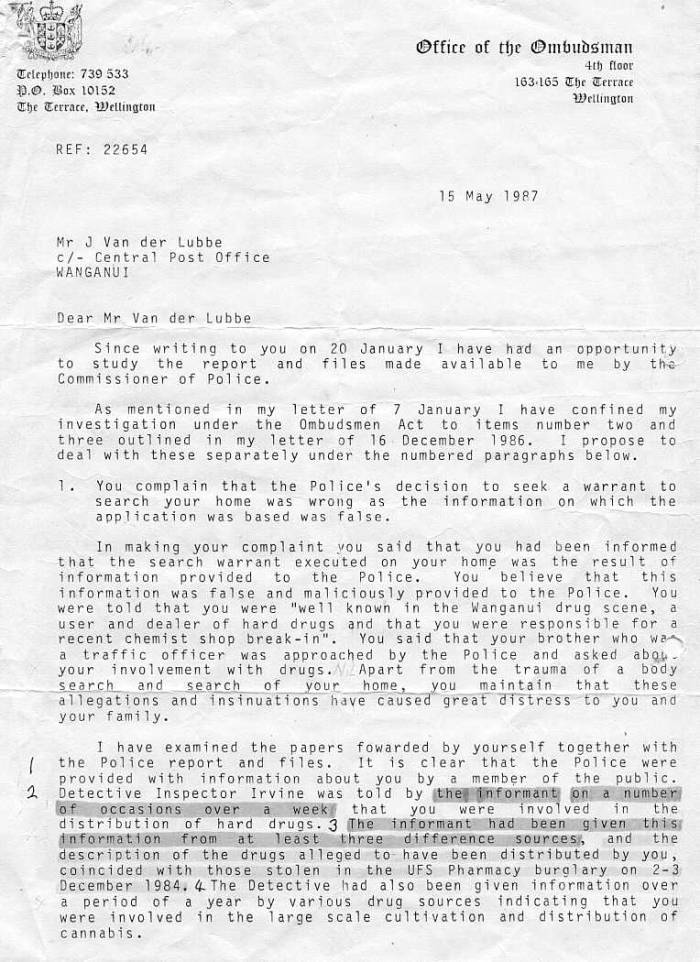
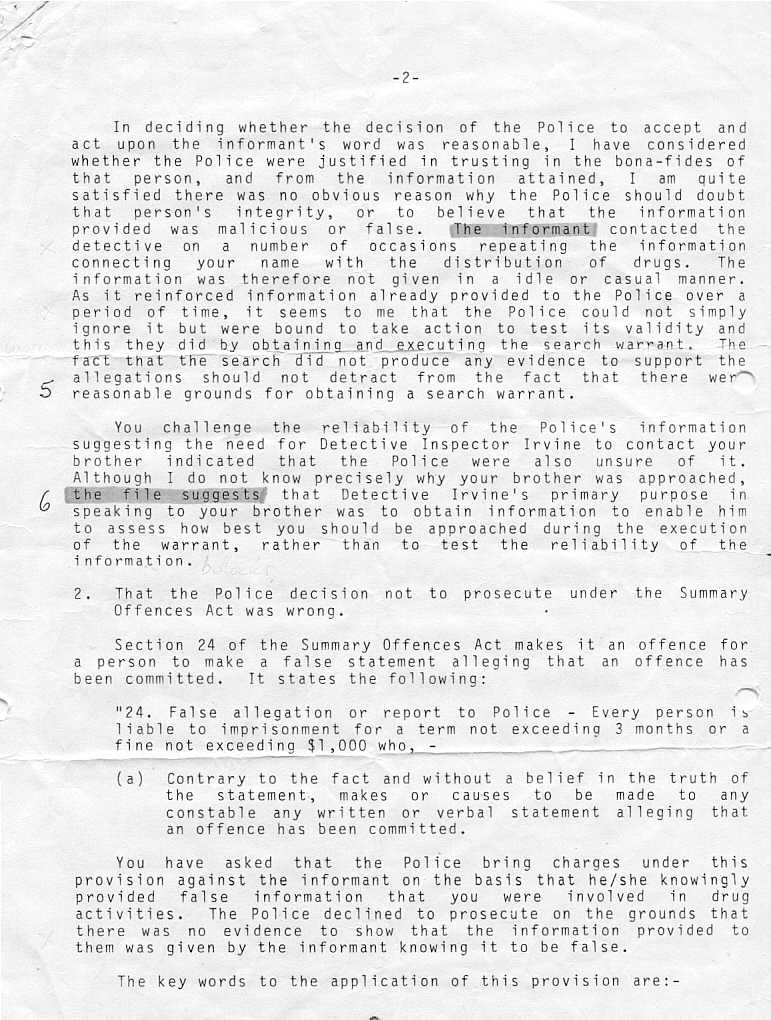
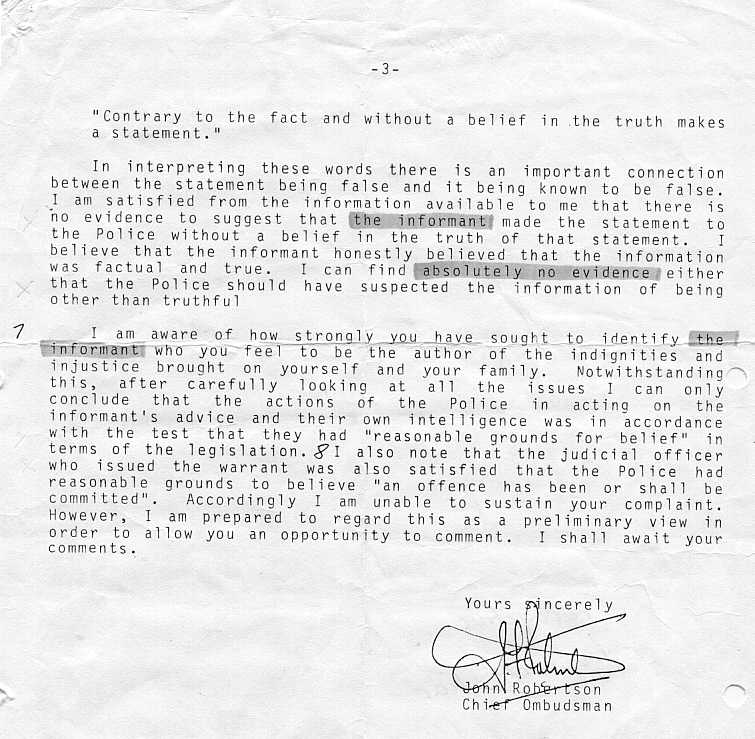

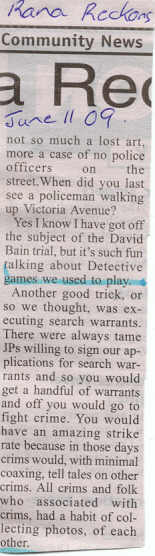
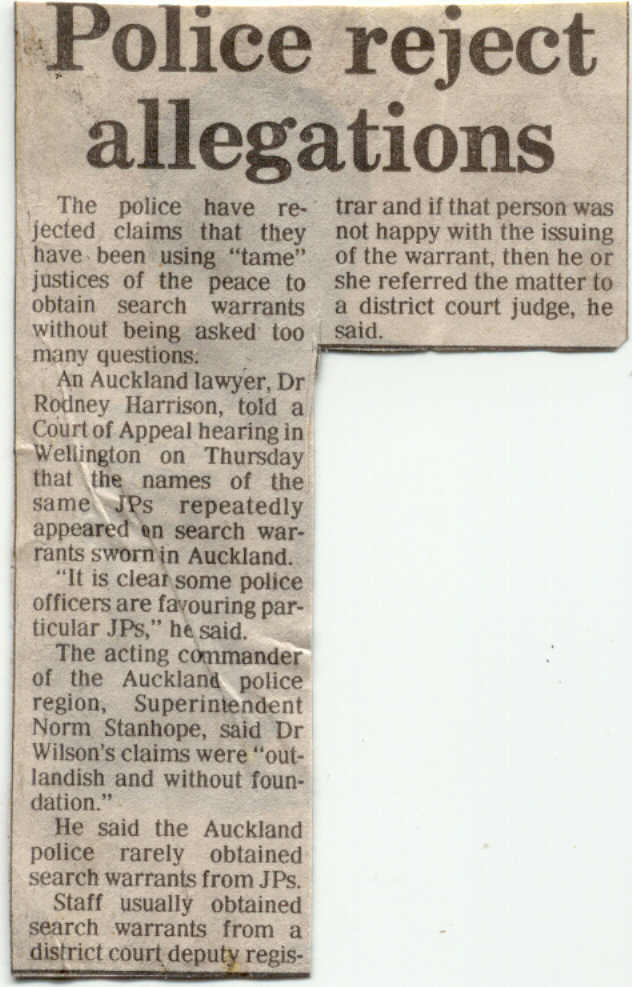
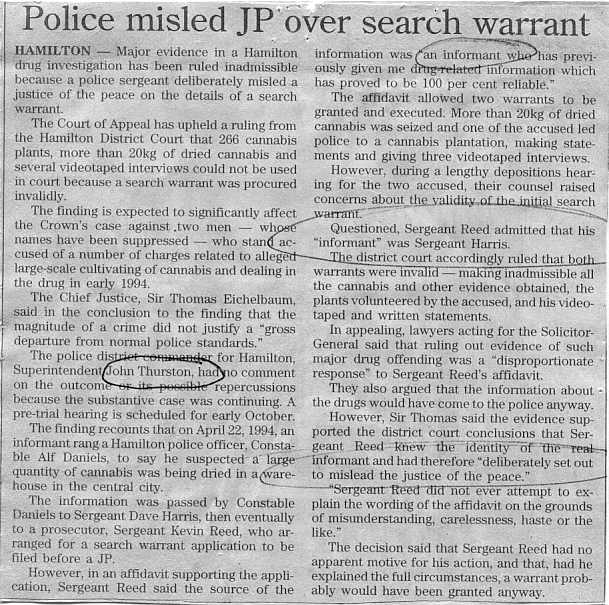


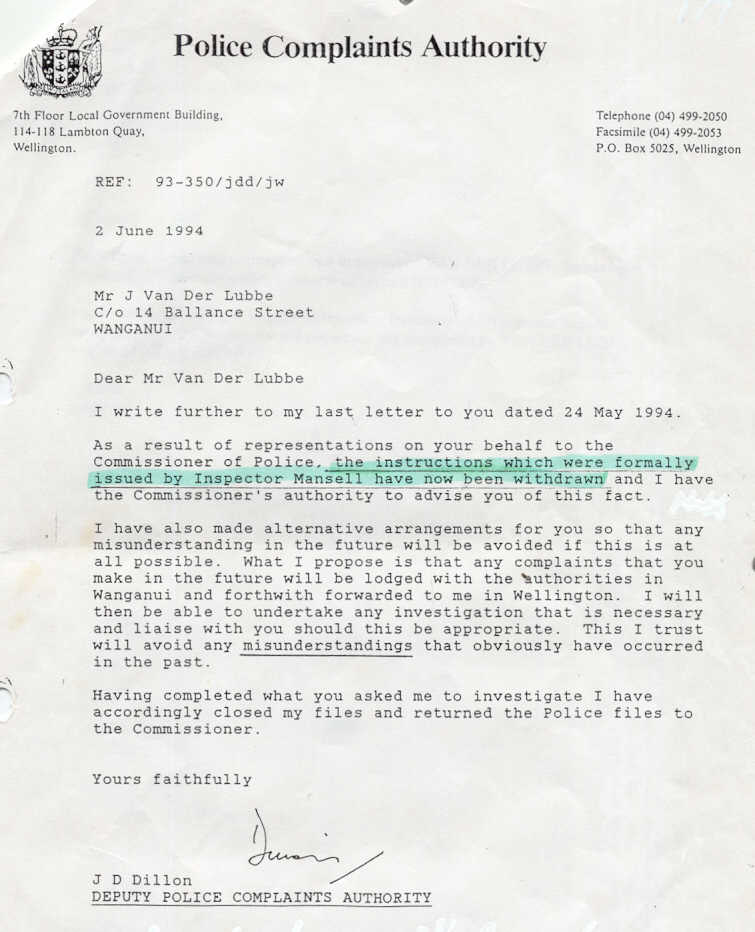


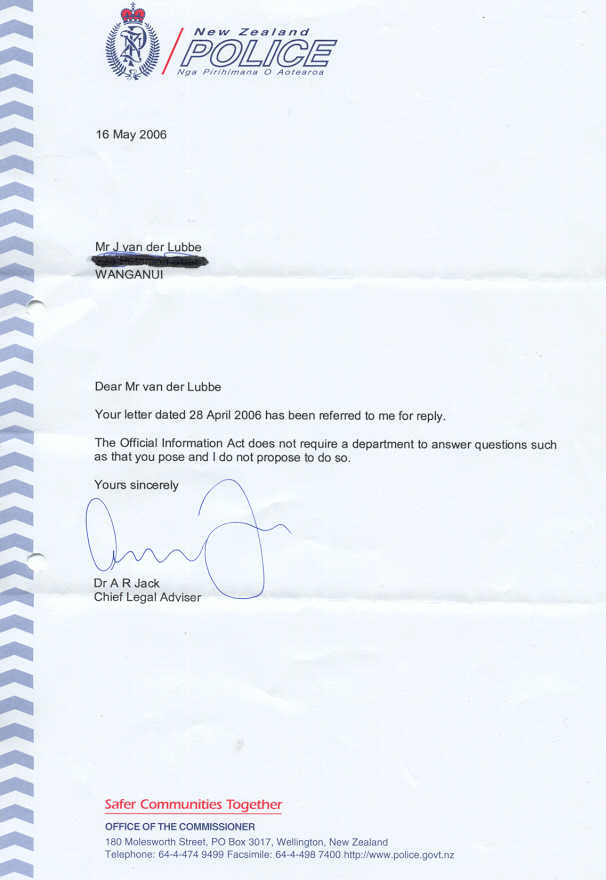 ———————————————————————————————————————–
 The offence of Perverting the course of justice is committed when an accused:- does an act or series of acts; which has or have a tendency to pervert; and which is or are intended to pervert; the course of public justice. The offence is contrary to common law and triable only on indictment. It carries a maximum penalty of life imprisonment and/or a fine. The course of justice must be in existence at the time of the act(s). The course of justice starts when:- an event has occurred, from which it can reasonably be expected that an investigation will follow; or investigations which could/might bring proceedings have actually started; or proceedings have started or are about to start. In (R v Cotter and Others [2000] TLR) it was held that ‘the course of public justice included the process of criminal investigation following a false allegation against either an identifiable or unidentifiable individual.’ The offence of perverting the course of justice is sometimes referred to as “attempting to pervert the course of justice”. It does not matter whether or not the acts result in a perversion of the course of justice: the offence is committed when acts tending and intended to pervert a course of justice are done.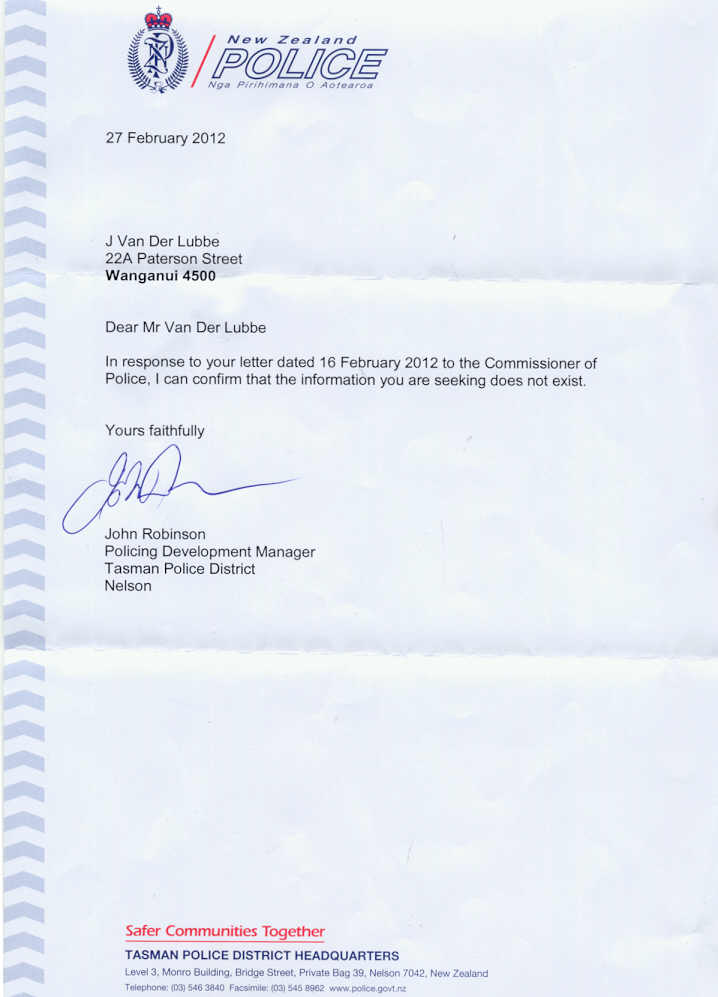
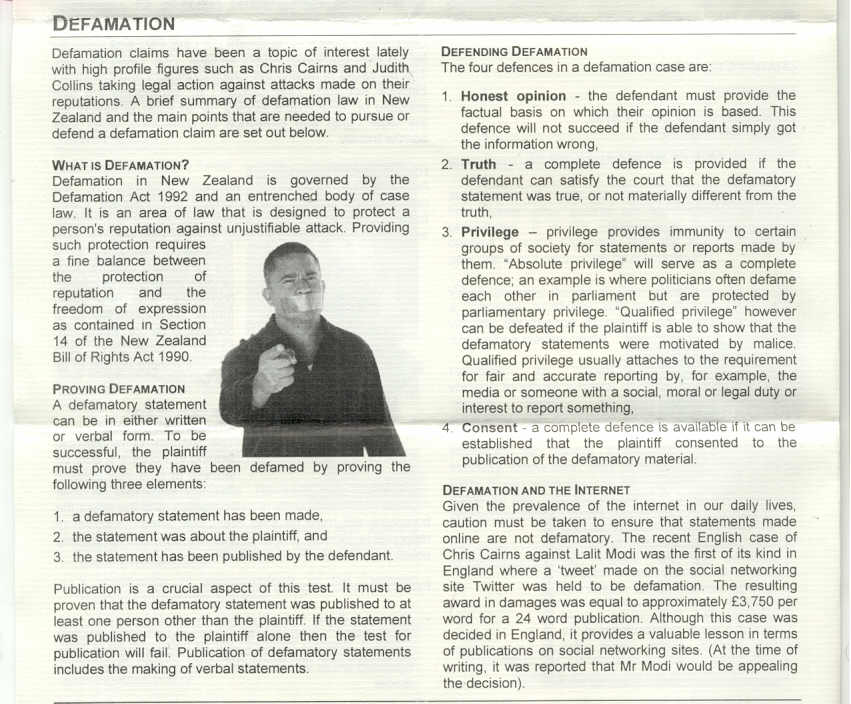

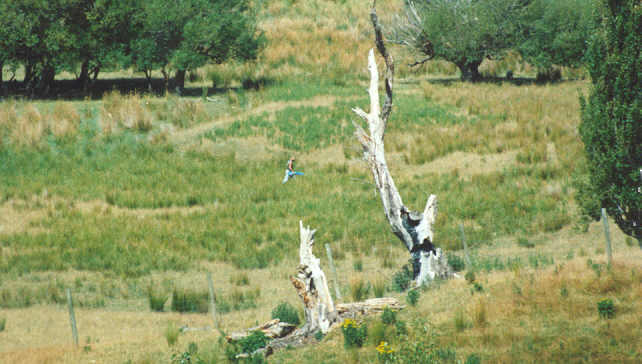
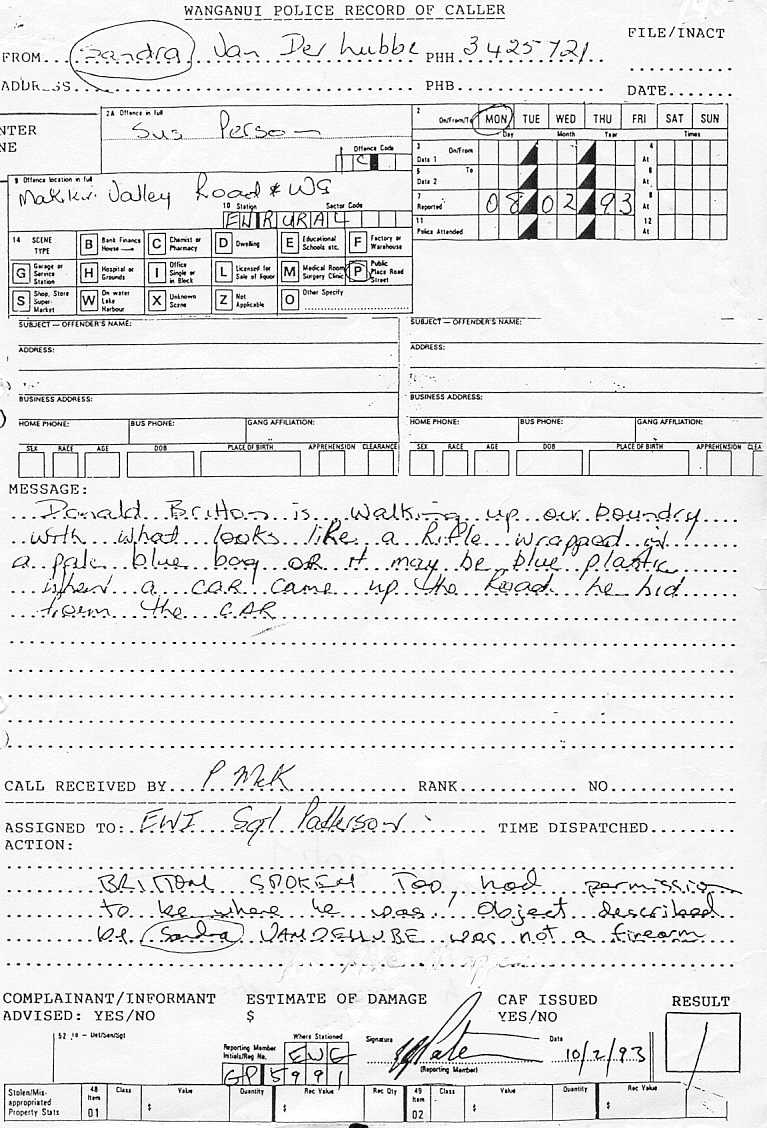
 Bent Cops
1 comment